No. 04 · Walls, ceilings, trim
Interior painting that starts with the wall.
Walls, ceilings, trim, doors and millwork, painted by a firm known for what happens before the paint: the filling, sanding and priming that decide how a room looks in low sun.

About interior painting
The paint is the last layer on a wall, and the thinnest. What decides how it looks is underneath: cracks opened and filled, old patches sanded flat, repairs primed so none of them shows through the finish as a dull spot.
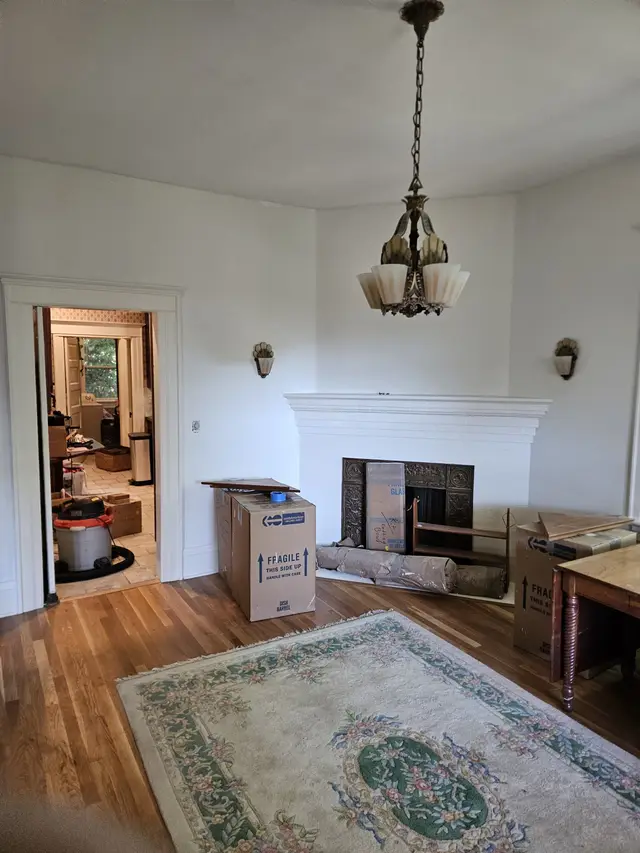
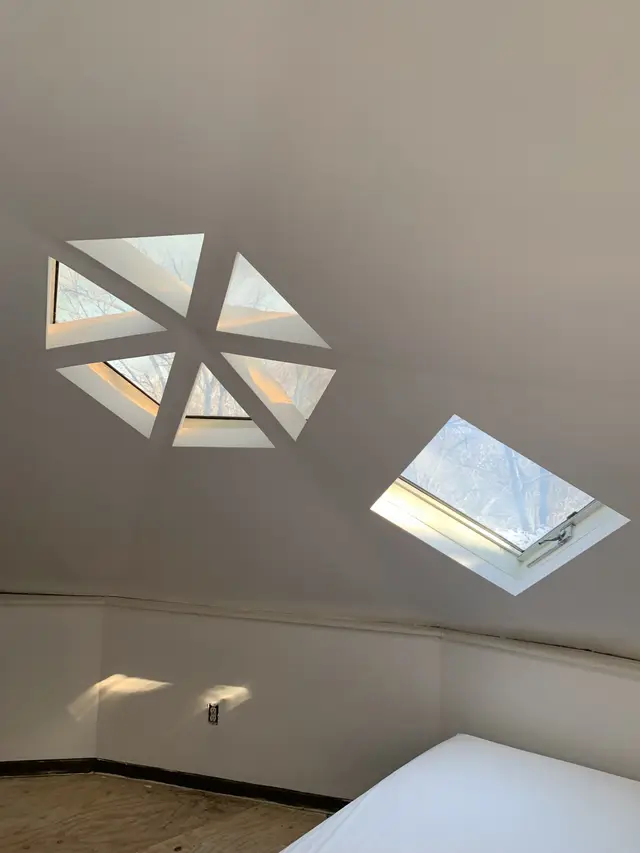
The light a room gets matters as much as the color. A wall beside a west window, a stair under a skylight, a deep color on old plaster: each asks for a truer surface before the first coat goes on.
Randy has been painting since 1987, in houses and commercial spaces alike, and he sums up the business in a line of his own: “We built our reputation… one coat at a time.”
When it’s called for
When preparation matters most
Going darker
Deep colors magnify small flaws in a wall, even in a flat finish. A move to a darker color is often the moment a wall needs a skim coat first.
Light across the wall
A window or a row of lights that rakes along a wall picks out every ridge and patch. Those walls are prepared for the light that will cross them, not for an overhead bulb.
Tall rooms and stairwells
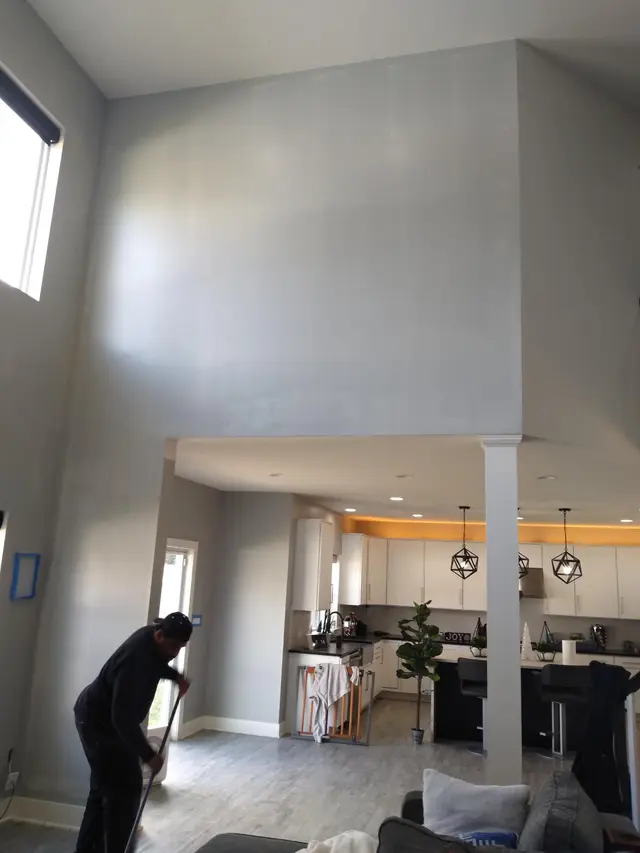
Two-story walls are usually lit by high windows, and a wall that size has to be rolled with a wet edge from top to bottom or the laps show. It takes staging set safely over finished floors.
Trim that takes the wear
Doors, casings, stair rails and window stools are handled every day. They want a harder, glossier finish than the walls, and that shine shows whatever is beneath it.
Choosing a sheen
Flat and matte finishes absorb light. They hide small flaws and touch up well, but they mark more easily and resist stains the least, which is why they suit ceilings and rooms that see little traffic.
Eggshell and satin carry a soft shine and stand up to cleaning, so they suit halls, family rooms and children’s rooms. The shine shows more of the wall, though, and wants a smoother surface. Semi-gloss, the usual choice for doors, trim and woodwork, wants a smoother one still.
Color works the same way. Deep colors, and any sheen above flat, magnify what is wrong with a wall. When a room is going dark or glossy, the walls are often skim-coated first to a Level 5 finish, the work Randy is best known for.
The work
How the work goes

The walkthrough
Randy walks the rooms with you and looks at the walls in the light they actually get. He tells you plainly what they need, then puts it in writing. The walkthrough and the written estimate are complimentary.
Repairs first
Cracks, holes, nail pops and failing plaster are dealt with before anything else, and every patch is sanded flat. Paint doesn’t hide a poor patch; it shows it.
Primer where it’s needed
Patches, bare drywall and stains are primed. Joint compound takes up paint differently from a painted wall, and an unprimed patch can flash through the finish as a dull spot.
Finish coats
Ceilings, walls and trim are cut in and rolled or brushed, each in the sheen chosen for it. A big change of color takes more coats than a refresh, and the number is set by the wall, not the calendar.
Seen in the room’s own light
Before the drop cloths come up, the walls are looked at in the light the room really has, from its windows and its lamps. Low sun and lamplight show what an overhead work light hides.
From the job sites


“Randy did a GREAT job! He showed up on time and completed the job above and beyond what i expected…”
“Randy's Painting Service is highly professional, efficient and reliable. Attention to detail is an integral part of Randy's brand. Randy's estimate was as good as his price. Randy is the rarest kind of man…”
Questions
Asked at the walkthrough.
Is it cheaper to paint yourself or hire a painter?
Most of what a painter charges is labor, so doing it yourself saves money and costs time. Most of that time goes into preparation: filling, sanding, priming patches, caulking trim and protecting floors. A room with sound walls and a small color change is fair weekend work; old plaster, tall walls or a deep color is where the preparation decides how it looks. Cost depends on the job and is set at the walkthrough.
Why do patches show through new paint?
Joint compound and bare drywall soak up paint differently from a painted wall, so an unprimed patch dries duller or a shade off. Painters call it flashing. The fix is to sand patches flat and prime them before the finish coats go on.
Which sheen should I use on my walls?
Flat or matte where you want a wall to look its smoothest and it won’t be scrubbed often. Eggshell or satin for halls and family rooms that need wiping, on walls smooth enough to take a little shine. Semi-gloss for doors, trim and woodwork.
Can an old wall take a dark color?
Yes, but a dark color shows a wall’s flaws more than a pale one does, even in a flat finish. Cracked or uneven plaster usually needs repair, and often a skim coat, before a deep color goes on. Randy will tell you at the walkthrough whether your walls are ready for it.
When is primer actually needed?
Over patches, bare drywall or plaster, water stains, and glossy surfaces that need dulling before new paint will grip. Sound, clean paint in a similar color can usually take finish coats directly. A large change in color can call for primer too.
Do you paint ceilings and trim as well as walls?
Yes: ceilings, walls, trim, doors and millwork, down to stair rails and balusters. Ceilings usually take a flat finish that hides minor flaws overhead, while trim takes a harder sheen that stands up to hands and cleaning.
Where
Interior painting, town by town.
Randy works from Easton across the Lehigh Valley and Bucks County. Choose your town for what interior painting involves in its houses.
Lehigh Valley
Related
Often done together.


Consultation
Request a private consultation.
Private walkthrough & written estimate, complimentary. Tell us a little about the house and the rooms, and Randy will be in touch to arrange a time.
- Hours
- Monday – Friday8:30 AM – 5:30 PMSaturday10 AM – 3 PMSundayClosed
- Service area
- Easton, Bethlehem, Allentown and the greater Lehigh Valley; Bucks County, Pennsylvania.
Fully insured — proof on request. Residential and commercial.